/contrib/famzah

Enthusiasm never stops


2 Comments

Why /sys/block/dm-0/queue/scheduler exists on my Linux system?

The device-mapper (DM) traditionally didn’t have its own I/O scheduler. Then why suddenly my DM devices have such a scheduler and what does it control?


A new type of device-mapper was introduced recently in the Linux kernel 2.6.31 – the request-based device-mapper. According to the Linux Kernel Newbies changelog for 2.6.31, there is a commit which does “Prepare for request based option”.

The issue is actually not in the new request-based DM option, which is to be used only for multipath block devices. The problem is that when you create a regular LVM device on kernels 2.6.31+, the DM device itself has I/O scheduler parameters. So does the underlying block device on top of which you created the LVM. Thus we are having two I/O schedulers in the path from the LVM device to the physical storage.

According to the author of the kernel patches for the request-based DM device, Kiyoshi Ueda, for a bio-based DM device, only the underlying device’s scheduler should affect performance. This is what my tests shown too, therefore there is no discrepancy.

Let me summarize this:

  • If you are *not* using multipath block devices in your DM/LVM setup, then only the underlying device’s scheduler (i.e. “/sys/block/sda/queue/scheduler”) takes effect. This applies for the trivial LVM setup which many of us used for years.
  • If you are using a multipath DM/LVM setup, then only the DM device’s scheduler (i.e. “/sys/block/dm-0/queue/scheduler”) takes effect.

References:


Leave a comment

Changing the ISO image in a virtual CDROM drive while KVM-Qemu is running

If you run KVM with enabled monitor management console, you can do some pretty powerful internal stuff while the KVM guest is running.

In order to have a KVM-Qemu management console, you should start KVM with something like:

-monitor telnet:127.0.0.1:3010,server,nowait,ipv4

See the official documentation of Qemu for more details and also the man page of qemu-kvm (unofficial mirror).

Once you have it set up, you can then telnet to the management console and review the available commands:

famzah@famzahpc:~$ telnet localhost 3010
Trying 127.0.0.1...
Connected to localhost.
Escape character is '^]'.

QEMU 0.11.0 monitor - type 'help' for more information
(qemu) help

Changing the ISO image of a virtual CDROM drive is quite easy:

  • First review what the current status of the drives is:
    (qemu) info block
    virtio0: type=hd removable=0 file=/dev/sdb-vol/win7 ro=0 drv=host_device encrypted=0
    ide0-cd0: type=cdrom removable=1 locked=0 file=/shared/win7-eval.iso ro=0 drv=raw encrypted=0
    ide1-cd0: type=cdrom removable=1 locked=0 [not inserted]
    
  • Then change the mounted ISO image in the CDROM drive on the fly:
    (qemu) change ide1-cd0 /shared/win-virtio-drivers.iso
    
  • Double-check that the changes took effect. KVM-Qemu will not issue an error message in case something went wrong (duh!):
    (qemu) info block
    virtio0: type=hd removable=0 file=/dev/sdb-vol/win7 ro=0 drv=host_device encrypted=0
    ide0-cd0: type=cdrom removable=1 locked=0 file=/shared/win7-eval.iso ro=0 drv=raw encrypted=0
    ide1-cd0: type=cdrom removable=1 locked=0 file=/shared/win-virtio-drivers.iso ro=1 drv=raw encrypted=0
    

Use the “help” command to review the other powerful commands which you can use to tune and debug your running KVM guest (“info”, “migrate” and “system_reset” seem like interesting candidates).


11 Comments

KVM-Qemu Virtio storage and network drivers for 32-bit/64-bit Windows 7, Windows Vista, Windows XP and Windows 2000

…bundled as ISO images, so that you can easily mount and use them in a KVM guest.

UPDATE: It seems that Fedora started to provide the latest drivers bundled as an ISO. Check the official Windows VirtIO Drivers page for links.


Download locations follow:

These are static ISO images, and I’ve built them by downloading the ZIP sources dated 24.09.2009 from the official WindowsGuestDrivers KVM page and then converting them to ISO image files by using K3b.

Note that Virtio provides noticeably faster disk and network access.

Please review the official page of Virtio for sample KVM command line arguments which set up Virtio storage and network devices. You may notice that there is an (undocumented) parameter “boot=on” specified for the “-drive” option. This “boot=on” parameter is vital for the “-drive” option, or else Windows 7 won’t like your drive and won’t install on it.

Note about Virtio storage drives and the Windows 7 installer
I was able to install Windows 7 right from the start by using a Virtio storage drive within the KVM guest. At first the Windows installer didn’t see the Virtio disk at all but there is an option to install additional storage drivers. I installed the Virtio Windows drivers from the above ISO images, the Windows installer detected the Virtio storage disk properly and everything went quite smooth afterwards.


Resources:


Leave a comment

Linux non-root user processes which run with group=root cannot change their process group to an arbitrary one

Don’t be fooled like me, here is what the Linux kernel experts say regarding this matter:

There is no such thing as a “super-user group”. No group has any special privileges.

And also:

An effective group ID of zero does not accord any special privileges to change groups. This is a potential source of confusion: it is tempting to assume incorrectly that since appropriate privileges are carried by the euid in the setuid-like calls, they will be carried by the egid in the setgid-like calls, but this is not how it actually works.

You can review the whole thread with subject “EUID != root + EGID = root, and CAP_SETGID” at the Linux Kernel Mailing List.


If you run a Linux process with “user” privileges which are non-root and “group” privileges which are root, you will not be able to change the “group” of this process run-time by setgid() functions to an arbitrary group of the system.

I expected that if a process runs with “group” privileges set to “root”, then this process has the CAP_SETGID capability and thus is able to change its “group” to any group of the system. This turns out not to be the case. Such a process can only work with files which are accessible by the “root” group, just as it would have been if the “group” was not “root” but any other arbitrary group.

Why would I want to change the group to an arbitrary one? Because the process may start with “group” root, do some privileged work and then completely drop “group” root privileges to some non-root “group”, for security reasons.


I tested this on Linux kernel 2.6.31 but the situation for some previous versions was the same too:

famzah@famzahpc:~$ cat /proc/version
Linux version 2.6.31-14-generic (buildd@rothera) (gcc version 4.4.1 (Ubuntu 4.4.1-4ubuntu8) ) #48-Ubuntu SMP Fri Oct 16 14:04:26 UTC 2009

Note that a process can run with non-root “user” and a root “group” for one of the following reasons:

  • The process was started by the “root” super-user. This case is of no interest for this article.
  • The process was started by a “user” which has “root” defined for group in /etc/passwd, for example:

    testor:x:1003:0:,,,:/home/testor:/bin/bash

  • The process was started by a non-root “user” but the “group” owner of the file is root and this file has the set-group-ID on execution by “chmod g+s” permission. For example:

    -rwxr-sr-x 1 famzah root 10616 2009-12-11 11:17 a.out

Here is (one of) the corresponding code in the kernel which checks if a process can switch its running “group”:

setregid() in kernel/sys.c:
        if (egid != (gid_t) -1) {
                if ((old_rgid == egid) ||
                    (current->egid == egid) ||
                    (current->sgid == egid) ||
                    capable(CAP_SETGID))
                        new_egid = egid;
                else
                        return -EPERM;
        }

As you can see, even though a process may have root for “group”, it will not be able to change it to an arbitrary one if the process doesn’t have the CAP_SETGID capability.

I think that once a process gets an effective group ID which is root, this process must be granted the CAP_SETGID capability. I’ve sent a request for comment to the Linux Kernel Mailing List and I’m awaiting their reply on this matter.


You can easily test it yourself that a process running with group “root” doesn’t get the CAP_SETGID regardless if it was run with the set-group-ID file permission and “group” owner root, or by a non-root user which has root set for “group” in /etc/passwd.

Here are my results:

famzah@famzahpc:~$ ls -la a.out && ./a.out
-rwxr-xr-x 1 famzah famzah 8650 2009-12-11 12:06 a.out
RUID=1000, EUID=1000, SUID=1000
RGID=1000, EGID=1000, SGID=1000

Capabilities list returned by cap_to_text(): =
CAP_SETUID: CAP_EFFECTIVE=n CAP_INHERITABLE=n CAP_PERMITTED=n
CAP_SETGID: CAP_EFFECTIVE=n CAP_INHERITABLE=n CAP_PERMITTED=n


famzah@famzahpc:~$ ls -la a.out && ./a.out
-rwxr-sr-x 1 famzah root 8650 2009-12-11 12:06 a.out
RUID=1000, EUID=1000, SUID=1000
RGID=1000, EGID=0, SGID=0

Capabilities list returned by cap_to_text(): =
CAP_SETUID: CAP_EFFECTIVE=n CAP_INHERITABLE=n CAP_PERMITTED=n
CAP_SETGID: CAP_EFFECTIVE=n CAP_INHERITABLE=n CAP_PERMITTED=n


famzah@famzahpc:~$ cat /etc/passwd|grep testor
testor:x:1003:0:,,,:/home/testor:/bin/bash
famzah@famzahpc:~$ cp a.out /tmp/
famzah@famzahpc:~$ sudo -u testor /tmp/a.out
[sudo] password for famzah:
RUID=1003, EUID=1003, SUID=1003
RGID=0, EGID=0, SGID=0

Capabilities list returned by cap_to_text(): =
CAP_SETUID: CAP_EFFECTIVE=n CAP_INHERITABLE=n CAP_PERMITTED=n
CAP_SETGID: CAP_EFFECTIVE=n CAP_INHERITABLE=n CAP_PERMITTED=n


# Only if you are run by "user" root (or set-user-ID root),
# you can change your "group", because you gain CAP_SETGID.

famzah@famzahpc:~$ sudo -u root /tmp/a.out
RUID=0, EUID=0, SUID=0
RGID=0, EGID=0, SGID=0

Capabilities list returned by cap_to_text(): =ep
CAP_SETUID: CAP_EFFECTIVE=y CAP_INHERITABLE=n CAP_PERMITTED=y
CAP_SETGID: CAP_EFFECTIVE=y CAP_INHERITABLE=n CAP_PERMITTED=y

The source code of the capabilities dumper follows:

/* Compile with: gcc -Wall -lcap capdump.c */

#define _GNU_SOURCE
#include <sys/capability.h>
#include <err.h>
#include <stdio.h>
#include <stdlib.h>
#include <unistd.h>
#include <sys/types.h>

#define NUM_CAPS_TESTED 2

void manually_dump_caps(cap_t caps) {
        const cap_value_t cap_value_codes[NUM_CAPS_TESTED] = {CAP_SETUID, CAP_SETGID};
        const char *cap_value_names[NUM_CAPS_TESTED] = {"CAP_SETUID", "CAP_SETGID"};
        const cap_flag_t cap_flag_codes[3] = {CAP_EFFECTIVE, CAP_INHERITABLE, CAP_PERMITTED};
        const char *cap_flag_names[3] = {"CAP_EFFECTIVE", "CAP_INHERITABLE", "CAP_PERMITTED"};
        // -- //
        cap_flag_value_t flag_got_value;
        int i, j;

        for (i = 0; i < NUM_CAPS_TESTED; ++i) {
                printf("%s: ", cap_value_names[i]);
                for (j = 0; j < 3; ++j) {
                        if (cap_get_flag(caps, cap_value_codes[i], cap_flag_codes[j], &flag_got_value) != 0) {
                                err(EXIT_FAILURE, "cap_get_flag()");
                        }
                        printf("%s=%s ", cap_flag_names[j], (flag_got_value ? "y" : "n"));
                }
                printf("\n");
        }
}

void safe_cap_free(void *obj_d) {
        if (cap_free(obj_d) != 0) {
                err(EXIT_FAILURE, "cap_free()");
        }
}

int main() {
        cap_t caps;
        char *human_readable_s;
        uid_t ruid, euid, suid;
        gid_t rgid, egid, sgid;

        if (getresuid(&ruid, &euid, &suid) != 0) {
                err(EXIT_FAILURE, "getresuid()");
        }
        if (getresgid(&rgid, &egid, &sgid) != 0) {
                err(EXIT_FAILURE, "getresgid()");
        }

        printf("RUID=%d, EUID=%d, SUID=%d\n", ruid, euid, suid);
        printf("RGID=%d, EGID=%d, SGID=%d\n\n", rgid, egid, sgid);

        // -- //

        caps = cap_get_proc();
        if (caps == NULL) {
                err(EXIT_FAILURE, "cap_get_proc()");
        }

        human_readable_s = cap_to_text(caps, NULL /* do not store length */);
        if (human_readable_s == NULL) {
                err(EXIT_FAILURE, "cap_to_text()");
        }

        printf("Capabilities list returned by cap_to_text(): %s\n", human_readable_s);
        manually_dump_caps(caps);

        // -- //

        safe_cap_free(human_readable_s);
        safe_cap_free(caps);

        return 0;
}


5 Comments

I2C via GPIO on Bifferboard running Debian

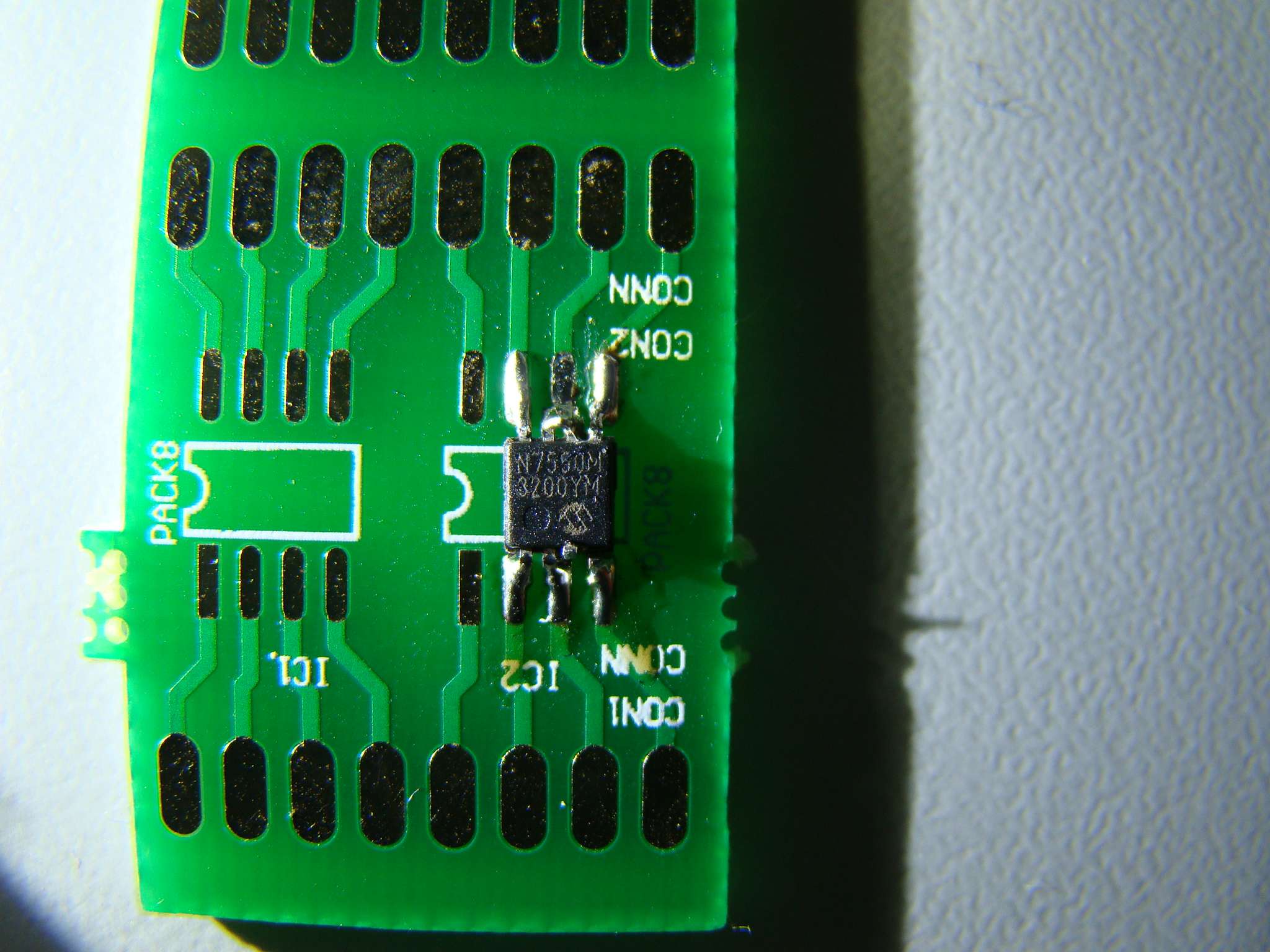
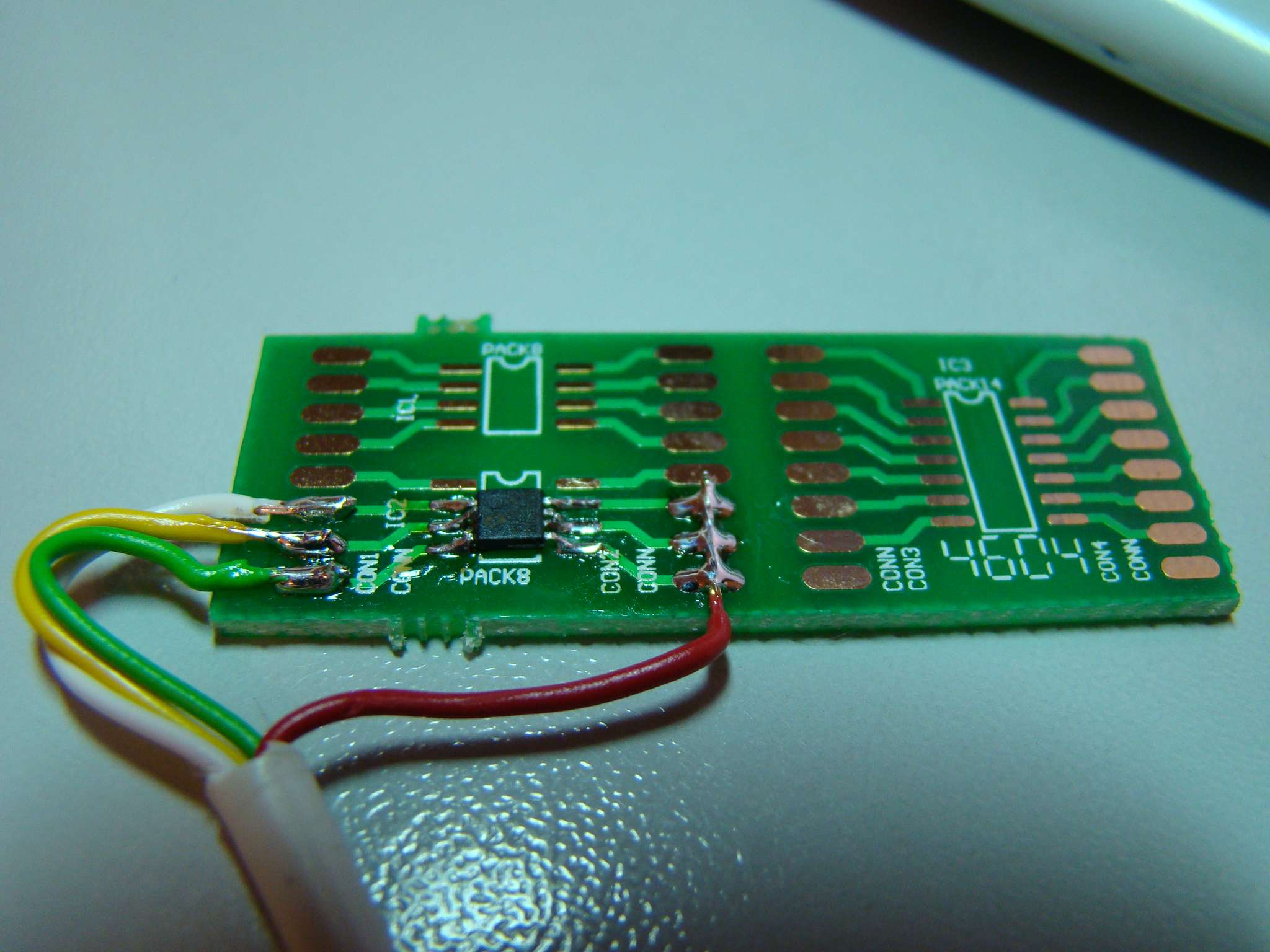
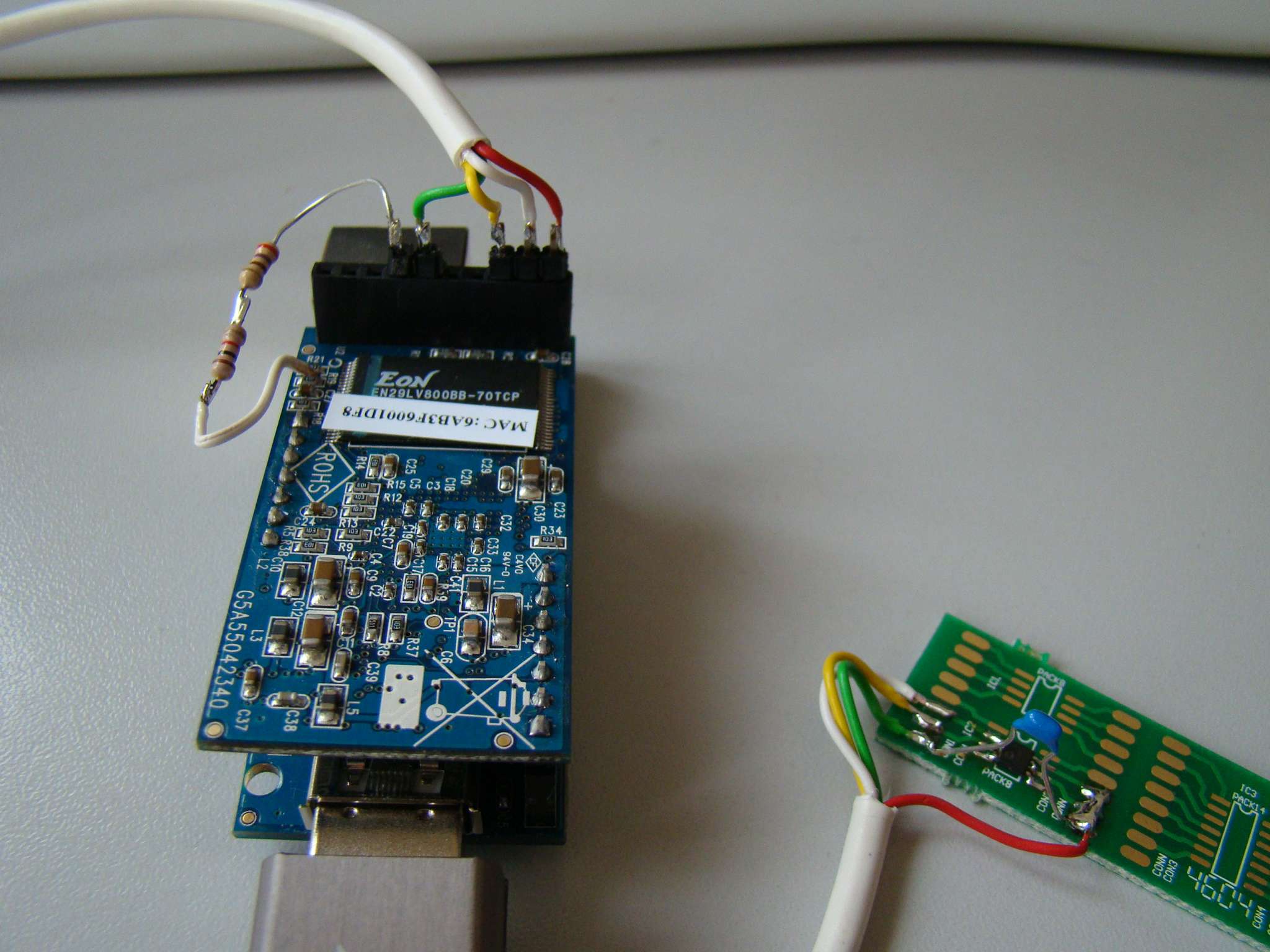
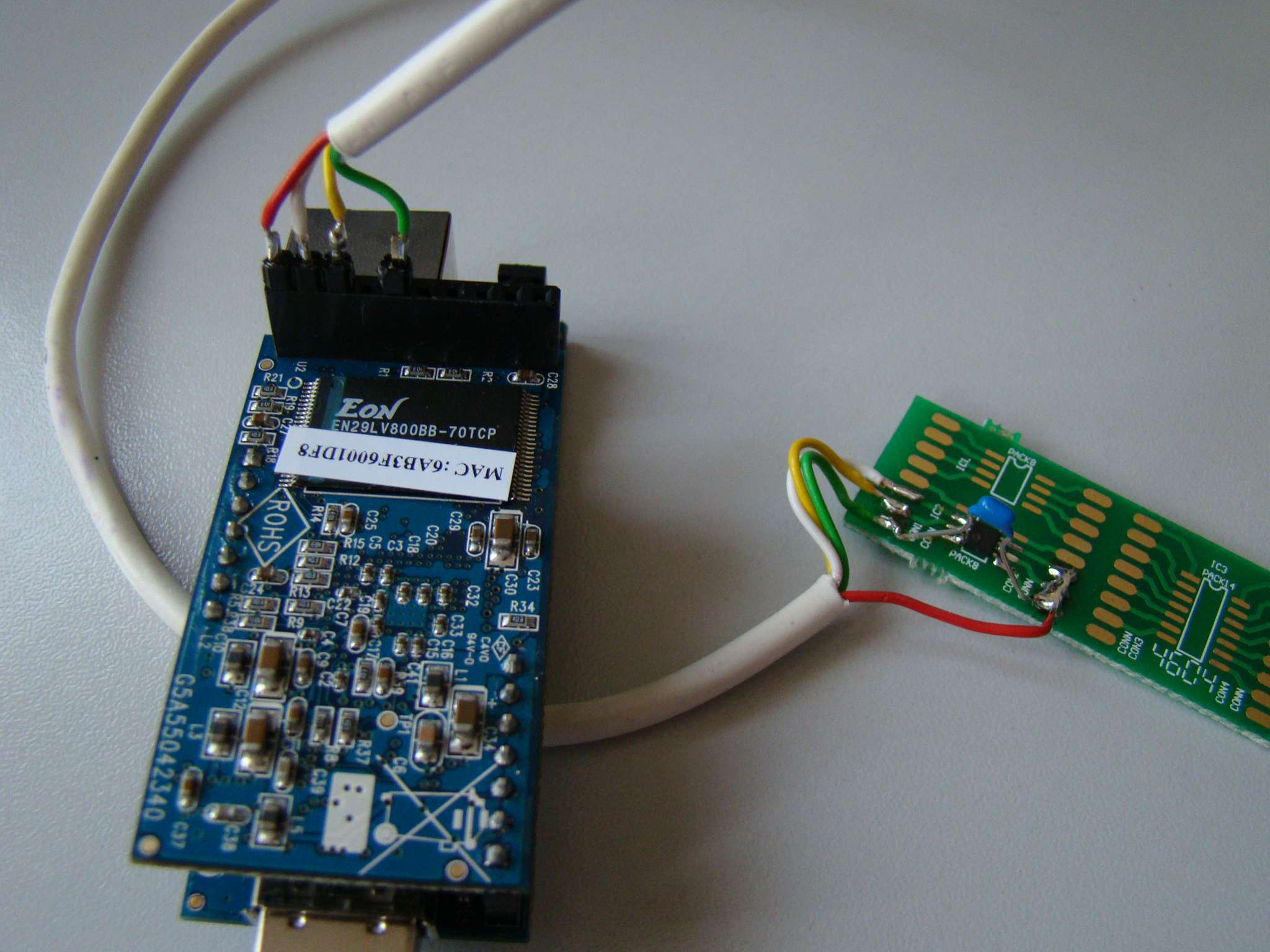
This is a Debian remake of the great article about how to interface a Microchip TCN75 Temperature sensor via I2C on Slackware. You have to read it first. Here I’ll post only brief notes and the differences with Debian on Bifferboard.

Required Software
You can install the required software by the following command, no need to compile anything:

apt-get install i2c-tools

Kernel modules
The instructions are fairly the same here, except that there is no module “i2c-core” and you don’t need to load it:

modprobe rdc321x_gpio
modprobe i2c-algo-bit
modprobe i2c-gpio

You have two options on where to connect the I2C pins (SDA and SCL):

  • The difficult one – connect them to the JTAG pins by disabling the JTAG first. You will need to solder on the Bifferboard which may void your warranty.
  • The easy one – connect them to the Serial console pins. There is no soldering involved here but the trade-off is that you cannot use these pins for your Serial RS-232 console which you may need for debugging or for other purposes. But you could always attach another serial console via USB by using an FT232R chip, for example. This option is my personal favorite here.

Both options work fine, I’ve tried them myself. Here are the corresponding commands:

# using the JTAG pins #11 and #13, soldering required to enable them
modprobe i2c-gpio-custom bus0=0,11,13

# using the Serial console pins #7 and #8, no soldering involved here
modprobe i2c-gpio-custom bus0=0,8,7

Finally, you need to load one more additional module and you are done:

modprobe i2c-dev

Application software
The original Slackware article gives an example on how to query your I2C temperature sensor.


1 Comment

Bifferboard performance benchmarks

The benchmarks were done while Bifferboard was running Linux kernel 2.6.30.5 and Debian Lenny.

Boot time
Total boot time: 1 minute 11 seconds (standard Debian Lenny base installation)

The boot process goes like this:

  • Initial boot. Mounted root device (5 seconds wasted on waiting for the USB mass storage to be initialized). Executing INIT. [+21 seconds elapsed]
  • Waiting for udev to be initialized (most of the time spent here), configuring some misc settings, no dhcp network, entering Runlevel 2. [+41 seconds elapsed]
  • Started “rsyslogd”, “sshd”, “crond”. Got prompt on the serial console. [+9 seconds elapsed]

Therefore, if a very limited and custom Linux installation is used, the total boot time could be reduced almost twice.

CPU speed
Calculated BogoMips: 56.32
According to a quite complete BogoMips list table, this is an equivalent of Pentium@133MHz or 486DX4@100MHz.

According to another CPU benchmarks comparison table for Linux, Bifferboard falls into the category of Pentium@100Mhz.

Memory speed
A “dd” write to “/dev/shm” performs with a speed of 6.3 MB/s.
The MBW memory bandwidth benchmark shows the following results:

bifferboard:/tmp# wget
http://de.archive.ubuntu.com/ubuntu/pool/universe/m/mbw/mbw_1.1.1-1_i386.deb
bifferboard:/tmp# dpkg -i mbw_1.1.1-1_i386.deb
bifferboard:/tmp# mbw 4 -n 20|egrep ^AVG
AVG Method: MEMCPY Elapsed: 0.15602 MiB: 4.00000 Copy:
25.637 MiB/s
AVG Method: DUMB Elapsed: 0.06611 MiB: 4.00000 Copy:
60.502 MiB/s
AVG Method: MCBLOCK Elapsed: 0.06619 MiB: 4.00000 Copy:
60.431 MiB/s

For comparison, my Pentium Dual-Core @ 2.50GHz with DDR2 @ 800 MHz (1.2 ns) shows a “dd” copy speed to “/dev/shm” of 271 MB/s, while the MBW test shows a maximum average speed of 7670.954 MiB/s. Bifferboard is an embedded device after all… 🙂

Available memory for applications
My base Debian installation with “udevd”, “dhclient3”, “rsyslogd”, “sshd”, “getty” and one tty session running shows 24908 kbytes free memory. You surely cannot put CNN.com on this little machine, but compared to the PIC16F877A which has 368 bytes (yes, bytes) total RAM memory, Bifferboard is a monster.

Disk system
All tests are done on an Ext3 file-system and a very fast USB Flash 8GB A-Data Xupreme 200X.
A “dd” copy to a file completes with a write speed of 6.1 MB/s.
The Bonnie++ benchmark test shows the following results:

Version 1.03d       ------Sequential Output------ --Sequential Input- --Random-
                    -Per Chr- --Block-- -Rewrite- -Per Chr- --Block-- --Seeks--
Machine        Size K/sec %CP K/sec %CP K/sec %CP K/sec %CP K/sec %CP /sec %CP
bifferboard.lo 300M   822  96  5524  61  4305  42   855  99 16576  67 143.2  12
                    ------Sequential Create------ --------Random Create--------
                    -Create-- --Read--- -Delete-- -Create-- --Read--- -Delete--
              files  /sec %CP  /sec %CP  /sec %CP  /sec %CP  /sec %CP /sec %CP
                 16  1274  94 14830 100  1965  85  1235  90 22519 100 2015  87

bifferboard.localdomain,300M,822,96,5524,61,4305,42,855,99,16576,67,143.2,12,16,1274,94,14830,100,1965,85,1235,90,22519,100,2015,87

Therefore, the sequential write speed is about 5.5 MB/s, while the sequential read speed is about 16.5 MB/s.

It’s worth mentioning that while the write tests were running, there was a very high CPU System load (not CPU I/O waiting) which indicates that the write throughput of Bifferboard may be a bit better if the file-system is not a journaling one. However, the tests for “Memory speed” above show that writing to “/dev/shm” (a memory-based file-system) completes with a rate of 6.3 MB/s. Therefore, this is probably the limit with this configuration.

Network
Both Netperf and Wget show a throughput of 6.5 MB/s.
The packets-per-second tests complete at a rate of 8000 packets/second.
Modern systems can handle several hundred thousand packets-per-second without an issue. However, the measured network performance of Bifferboard is more than enough for trivial network communication with the device. During the network benchmark tests, there was very high CPU System usage, but that was expected.

Encryption and SSH transfers
The maximum encryption rate for an eCryptfs mount with AES cipher and 16 bytes key length is 536 KB/s. The standard SSH Protocol 2 transfer rate using the OpenSSH server is about the same – 587.1 KB/s. If you try to transfer a file over SSH and store it on an eCryptfs mounted volume, the transfer rate is 272.2 KB/s, which is logical, as the processing power is split between the SSH transfer and the eCryptfs encryption.
You can try to tweak your OpenSSH ciphers, in order to get much better performance. The OpenSSH ciphers performance benchmark page will give you a starting point.

Conclusion
Bifferboard performs pretty well for its price. It’s my personal choice over the 8-bit 16F877A and the other 16-bit Microchip / ARM microcontrollers, when a project does not require very fast I/O.


Leave a comment

Benchmark the packets-per-second performance of a network device

This article is about measuring network throughput and performance using a Linux box, in a very approximate way.

There are many network performance benchmarks and stress-tests which measure the maximum bandwidth transfer rate of a device – that is how many bytes-per-second or bits-per-second a device can handle. Good examples for such benchmark tests are NetPerf, Iperf, or even multiple Wget downloads which run simultaneously and save the downloaded files to /dev/null, so that we eliminate the hard disk throughput of the local machine.

There is however another very important metric for the throughput of a network device – its packets-per-second (pps) maximum rate.

Today I struggled a lot to find out a tool which measures the packets-per-second throughput of a network device and couldn’t find a suitable one. Therefore, I tried two different methods both using the ICMP echo protocol, in order to approximately measure the packets-per-second metric of a remote network device which is directly attached to my network.

Method #1: The old-school “ping“. Execute the following as root:

ping -q -s 1 -f 192.168.100.101

This floods the destination “192.168.100.101” with the smallest possible PING packets. Here is a sample output:

--- 192.168.100.101 ping statistics ---
20551 packets transmitted, 20551 received, 0% packet loss, time 6732ms

You can calculate the packets-per-second rate by dividing the count of the packets to the elapsed time:

20551 packets / 6.732 secs ~= 3052 packets-per-second

Note that this is the count of the replies at 0% packet loss. Which means that the same count requests were sent too. So the final result is:

3052 x 2 = 6104 packets-per-second

Note that if you run multiple “ping” commands simultaneously, you will get more accurate results. You need to sum the average values from every “ping” command, in order to calculate the overall packets-per-second rate. For example, when I performed the measurement against the very same host but using two or three simultaneous “ping” commands, the average packets-per-second value was settled to 8000.

Method #2: The much faster and extended “hping3“. Execute the following:

taurus:~# time hping3 192.168.100.101 -q -i u20 --icmp|tail -n10

This will bombard the host “192.168.100.101” with ICMP echo requests. After a few seconds, you can interrupt the ping by pressing CTRL+C. Here is the output:

--- 192.168.100.101 hping statistic ---
67932 packets transmitted, 10818 packets received, 85% packet loss
round-trip min/avg/max = 0.5/7.8/15.6 ms

real 0m2.635s
user 0m0.368s
sys 0m1.160s

If the packet loss is 0%, decrease “-i u20” to something smaller like “-i u15” or less. Make sure to not decrease it too much, or you may temporarily lose connectivity to the device (because of switch problems?).

The calculations for the packets-per-second value are the same as for “ping” above. You need to divide the received packets to the time:

10818 packets / 2.635 secs ~= 4105 packets-per-second

Because the calculated packets-per-second represent the rate of successful replies, we need to multiply it by two, in order to get the actual packets-per-second, as the count of the replies is the same as the count of the successfully received requests. The final result is:

4105 x 2 = 8210 packets-per-second

The calculated value by “hping3” is the same as the one by “ping”. We are either correct, or both methods failed… 🙂


Some notes which apply for both methods:

  • You should run multiple instances of the ping commands, either from the same or from different machines, in order to be able to properly saturate the connection of the machine which is being tested.
  • The machines from which you test have a hardware rate limit too. If the host being tested has a similar rate limit, you surely need to run the ping commands from more than a single machine.
  • You should run more and more simultaneous ping commands until you start to receive similar results for the calculated packets-per-second rate. This indicates a saturation of the network bandwidth, usually at the remote host which is being tested, but may also indicate a saturation somewhere in the route between your tester machines and the tested host…
  • The ethernet switches also have a hardware limit of the bandwidth and the packets-per-second. This may influence the overall results.
  • If the tested device has any firewall rules, you should temporarily remove them, because they may slow down the packets processing.
  • If the tested device is a Linux box, you should temporarily remove the ICMP rate limits by executing “sysctl net.ipv4.icmp_ratelimit=0” and “sysctl net.ipv4.icmp_ratemask=0”.
  • If the tested device is a router, a better way to test its packets-per-second maximum rate is to flood one of its interfaces and count the output rate at the other one, assuming that you are actually flooding a host which is behind the router according to its routing tables.

Thanks to zImage for his usual willingness to help people out by giving good tips and ideas.


11 Comments

A much faster popen() and system() implementation for Linux

This project is now hosted on GitHub: https://github.com/famzah/popen-noshell


Problem definition
As we already discussed it, fork() is slow. What do we do if we want to make many popen() calls and still spend less money on hardware?

The parent process calling the popen() function communicates with the child process by reading its standard output. Therefore, we cannot use vfork() to speed things up, because it doesn’t allow the child process to close its standard output and duplicate the passed file descriptors from the parent to its standard output before exec()’uting the command. A child process created by vfork() can only call exec() right away, nothing more.

If we used threads to re-implement popen(), because the creation of a thread is very light-weight, we couldn’t then use exec(), because invoking exec() from a thread terminates the execution of all other threads, including the parent one.

Problem resolution
We need a fork mechanism which is similar to threads and vfork() but still allows us to execute commands other than just exec().

The system call clone() comes to the rescue. Using clone() we create a child process which has the following features:

  • The child runs in the same memory space as the parent. This means that no memory structures are copied when the child process is created. As a result of this, any change to any non-stack variable made by the child is visible by the parent process. This is similar to threads, and therefore completely different from fork(), and also very dangerous – we don’t want the child to mess up the parent.
  • The child starts from an entry function which is being called right after the child was created. This is like threads, and unlike fork().
  • The child has a separate stack space which is similar to threads and fork(), but entirely different to vfork().
  • The most important: This thread-like child process can call exec().

In a nutshell, by calling clone in the following way, we create a child process which is very similar to a thread but still can call exec():

pid = clone(fn, stack_aligned, CLONE_VM | SIGCHLD, arg);

The child starts at the function fn(arg). We have allocated some memory for the stack which must be aligned. There are some important notes (valid at the time being) which I learned by reading the source of libc and the Linux kernel:

  • On all supported Linux platforms the stack grows down, except for HP-PARISC. You can grep the kernel source for “STACK_GROWSUP”, in order to get this information.
  • On all supported platforms by GNU libc, the stack is aligned to 16 bytes, except for the SuperH platform which is aligned to 8 bytes. You can grep the glibc source for “STACK_ALIGN”, in order to get this information.

Note that this trick is tested only on Linux. I failed to make it work on FreeBSD.

Usage
Once we have this child process created, we carefully watch not to touch any global variables of the parent process, do some file descriptor magic, in order to be able to bind the standard output of the child process to a file descriptor at the parent, and execute the given command with its arguments.

You will find detailed examples and use-cases in the source code. A very simplified example follows with no error checks:

fp = popen_noshell("ls", (const char * const *)argv, "r", &pclose_arg, 0);
while (fgets(buf, sizeof(buf)-1, fp)) {
    printf("Got line: %s", buf);
}
status = pclose_noshell(&pclose_arg);

There is a more compatible version of popen_noshell() which accepts the command and its arguments as one whole string, but its usage is discouraged, because it tries to very naively emulate simple shell arguments interpretation.

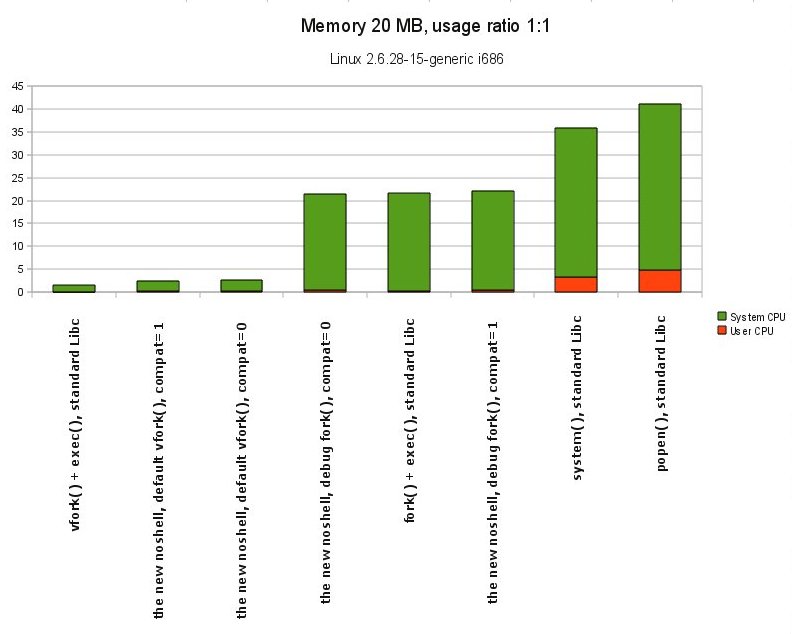
Benchmark results
I’ve done several tests on how fast is popen_noshell() compared to popen() and even a bare fork()+exec(). All the results are similar and therefore I’m publishing only one of the benchmark results:
Tested functions on Linux - popen_noshell(), fork(), vfork(), popen(), system()


Here are the resources which you can download:

I will appreciate any comments on the library.


2 Comments

fork() gets slower as parent process uses more memory

Background information
Forking is an important, fundamental part of Unix, critical to the support of its design philosophy. For example, if a process wants to execute a command, it has to fork() a child process which then immediately calls exec(). And since the philosophy of Unix involves executing many small commands/programs, in order to achieve something meaningful, it turns out that fork() is called pretty often.

There are two main fork() patterns when a parent process wants to execute a command:

  • The parent does not need to communicate with the child process in any way – the child process executes, and the parent gets its exit code back. No input/output with the child is done at all, only the inital command line arguments are passed.
  • The parent needs to communicate with the child process – either it needs to supply something at the standard input or some other file descriptor of the child, or it wants to get some information from the standard output or some other file descriptor of the child, or both.

For the case when there is no communication involved, Unix guys developed the vfork() call. It is a very light-weight version of fork(), very close to threading. The gotcha here is that a child process which was created by vfork() cannot modify any variables in its space at all or do something else, because it has no own stack. The child process is only allowed to call exec() right after it was born, nothing more. This speeds up the usual fork()-then-exec() model, because often the parent does not need to communicate with the child process – the parent just wants the command executed with the given command line arguments.

For all other cases when the parent communicates with the child internally using file descriptors (anonymous pipes, etc.), the standard fork() system call is used.

Problem definition
It turns out that when the parent process allocates some memory, the fork() call takes longer to execute if a bigger amount of this allocated memory is being used, that is – if the parent process writes something there. Linux and probably the other Unix systems employ a copy-on-write feature and don’t physically copy the allocated memory from the parent into the child process initially on each fork(). Not until the child modifies it. Nevertheless, the fork() call gets slower and slower as more and more memory is being used (not just allocated) in the parent process. It seems that even though the data of the allocated/used memory itself is not being copied, thanks to the copy-on-write feature, the internal virtual memory structures in the kernel, which hold the information about how much and what memory the parent process has allocated, are being copied in an inefficient way while the child process is being created by fork().

Currently available options
So why don’t we then just vfork() always? It is very fast. And the answer is – because we cannot communicate with the child process when it was created by vfork().

Okay, so why don’t we use threads then? They are similar to vfork(), only that the child process (thread) has its own stack and shares the data segment (allocated memory) of the parent process. We can even use these shared data variables for inter-process communication. And the answer is – because a thread cannot invoke exec() by definition. This is not supported by the threading libraries, as required by POSIX.1.

Talk to me in numbers, how slower does fork() get in regards to memory allocation and usage
Here are some benchmark results, the forking is done a few thousand times, in order to accumulate an accountable CPU time. The program which is being exec()’ed is a very tiny binary which contains only two system calls – write(“Hello world”) and then _exit(0). The benchmark results follow:

System info Allocated memory Usage ratio vfork() + exec() fork() + exec()
Linux 2.6.28-15-generic i686 20MB 1:2 (10MB) 1.49 12.08
Linux 2.6.28-15-generic i686 20MB 1:1 (20MB) 1.53 21.60
Linux 2.6.28-15-generic i686 40MB 1:2 (20MB) 1.59 21.23
FreeBSD 7.1-RELEASE-p4 i386 20MB 1:2 (10MB) 2.26 20.22
FreeBSD 7.1-RELEASE-p4 i386 40MB 1:2 (20MB) 2.44 33.94

As we can see from the test results, the vfork() call is not affected by the amount of memory usage. This does not apply for fork() though. On Linux we observe almost two times more CPU usage as the memory usage is increased twice. On FreeBSD the results are similar, only a bit better – if the memory usage is increased twice, the CPU usage of fork() is increased with 50% (vs. 100% on Linux). Even though, the difference in CPU time between the vfork() and fork() calls is significant on both operating systems – fork() is more than 1000% slower.

You can read my next article which describes a solution for Linux which allows a parent process to communicate with its child, similar to fork(), but is as fast as vfork(). The article also contains more detailed information about the benchmark tests we did, in order to populate the above table.


35 Comments

Running Debian on Bifferboard

There are three major steps in installing Debian on your Bifferboard:

  1. Kernel boot command line.
  2. Kernel installation on the Bifferboard.
  3. Rootfs installation on a USB device or an SD/MMC card.

Kernel boot command line

Since Biffboot v3.3, dated 19.July.2010, the kernel boot command line no longer specifies an external block device for the root file system. As a result of this, you need to update the boot configuration before you can boot from a USB device or an SD/MMC card. You have two options to configure the boot command line:

You need to set the kernel boot command line (“Kernel cmndline”) to:

console=uart,io,0x3f8 root=/dev/sda1 rootwait

Kernel installation on the Bifferboard

Download a pre-built kernel binary image:

The kernel is compiled with (almost) all possible modules, so your Bifferboard should be able to easily use any device supported on Debian. Once you have downloaded the kernel image, you can then upload it to the Bifferboard, as advised at the Biffboot Wiki page. You have two options to upload the kernel – via the serial port or over the ethernet. Both work well.

Example: Assuming that you have the Bifferboard SVN repository checked out in “~/biffer/svn“, you have downloaded the “vmlinuz-2.6.30.5-bifferboard-ipipe” kernel image in “/tmp“, your Bifferboard has a MAC address of “00:B3:F6:00:37:A9“, and you have connected it on the Ethernet port “eth0” of your computer, here are the commands that you would need to use:

cd ~/biffer/svn/utils
sudo ./bb_eth_upload.py eth0 00:B3:F6:00:37:A9 /tmp/vmlinuz-2.6.30.5-bifferboard-ipipe

Rootfs installation on a USB device or an SD/MMC card

Once you have the kernel “installed” on the Bifferboard and ready to boot, you need to prepare a rootfs media. This is where your Debian installation is stored and booted from. Download one of the following pre-built rootfs images (default root password is “biffroot”):

The “developer” version adds the following packages: build-essential, perl, links, manpages, manpages-dev, man-db, mc, vim. Note that for each image you will need at least 100MB more free on the rootfs media.

In order to populate the rootfs media, you have to do the following:

  1. Create one primary partition, format it as “ext3” and then mount the USB device or SD/MMC card.
  2. Extract the archive in the mounted directory.
  3. Unmount the directory.

Example: Assuming that you have the Bifferboard SVN repository checked out in “~/biffer/svn“, you have downloaded the “minimal” rootfs image in “/tmp“, and you are using an SD/MMC card under the device name “/dev/mmcblk0“, here are the commands that you would need to use:

sudo bash
mkdir /mnt/rootfs
cd ~/biffer/svn/debian/rootfs
./format-and-mount.sh /dev/mmcblk0 /mnt/rootfs
tar -jxf /tmp/debian-lenny-bifferboard-rootfs-minimal.tar.bz2 -C /mnt/rootfs
umount /mnt/rootfs
# CHANGE THE DEFAULT ROOT PASSWORD!

When you have the USB device or SD/MMC card ready and populated with the customized Debian rootfs, plug it in Bifferboard, attach a serial cable to Bifferboard, if you have one, and boot it up.

That’s it. Enjoy your Bifferboard running Debian.

Update: As already mentioned in the comments below, you would probably need to set up swap too. Here is my recipe:

# change "128" (MBytes) below to a number which suits your needs
dd if=/dev/zero of=/swapfile bs=1M count=128
mkswap /swapfile
swapon /swapfile # enables swap right away; disable with "swapoff -a"
echo '/swapfile none swap sw 0 0' >> /etc/fstab # enables swap at system boot

Using a file for swap on a 2.6 Linux kernel has the same performances as using a separate swap partition as discussed at LKML.

Update 2: As announced by Debian, Debian 5.0 (lenny) has been superseded by Debian 6.0 (squeeze). Security updates have been discontinued as of February 6th, 2012. Thus by downloading and installing the images provided here, you’re using an obsolete Debian release. If that’s not a problem for you, read on. You need to change the file “/etc/apt/sources.list” to the following using your favorite text editor:

deb http://archive.debian.org/debian lenny main contrib non-free
deb-src http://archive.debian.org/debian lenny main contrib non-free
deb http://archive.debian.org/debian-security/ lenny/updates main contrib non-free
deb-src http://archive.debian.org/debian-security/ lenny/updates main contrib non-free

P.S. If you want to build your own customized Debian rootfs image for Bifferboard – checkout the Bifferboard SVN repository and review the instructions in “debian/rootfs/images.txt“.

References: